
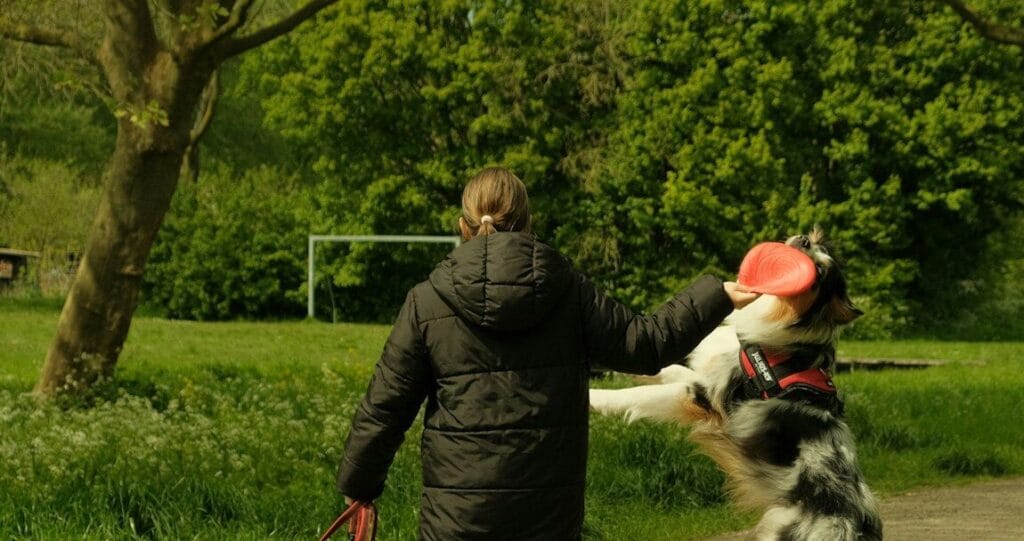
You walk through the door and your dog launches at you like you’ve been gone for a year. Or a guest arrives, and suddenly there are muddy paw prints on their good pants. Jumping is one of the most common training problems dog owners face, and it’s easy to see why it sticks around: it feels friendly, it often gets results, and it looks harmless until someone gets knocked off balance.
Table of Contents
The short answer: to stop a dog from jumping on people, teach your dog what to do instead (such as keeping all four paws on the floor or sitting), reward that behavior every time, and make sure jumping never earns attention. While your dog is learning, use a leash, gate, or crate so they can’t keep practicing the habit. Everyone who greets your dog needs to follow the same rules.
This guide explains why dogs jump, which common reactions backfire, a step-by-step training plan, and how to handle tougher situations like guests, walks, puppies, and big, bouncy dogs.
How to Stop a Dog From Jumping: The Quick Version
- Pick a greeting rule. Four paws on the floor or a sit works for most dogs.
- Reward the right behavior immediately. Treats, calm praise, or petting the moment paws are on the ground.
- Take away attention when your dog jumps. Turn away or step back, then re-engage as soon as all four feet are down.
- Prevent practice. Use a leash, gate, or crate when jumping is likely, such as when visitors arrive.
- Be consistent. Every person, every time.
The sections below walk through each step in detail.
Why Do Dogs Jump on People?
Knowing why your dog jumps makes it easier to fix. Veterinary behaviorists and trainers point to a handful of common causes.
It’s a natural greeting
According to VCA Animal Hospitals’ guidance on jumping up, written by board-certified veterinary behaviorists, social dogs naturally jump when they greet people. Most dogs are shorter than the people they’re greeting, and jumping brings them closer to face level, which is how dogs usually meet other dogs.
It works
Most of the time, a dog that jumps gets something in return: eye contact, a pat, a laugh, even a scolding. VCA notes that behaviors that help dogs reach their goals get repeated. The American Kennel Club says the same thing: jumping becomes a habit that’s unintentionally reinforced when people talk to, touch, or otherwise acknowledge the dog. The same learning pattern is behind other attention-getting habits, and our guide on why dogs stare at their owners explains how dogs repeat whatever pays off.
Excitement and pent-up energy
The ASPCA notes that jumping often happens when a dog becomes overly excited and hasn’t been taught appropriate ways to direct that energy. Puppies, adolescent dogs, and playful dogs are especially prone to it.
Uncertainty or anxiety
Not every jumper is simply thrilled. VCA’s behaviorists explain that dogs lacking confidence may jump because of underlying anxiety or conflict about an upcoming interaction, and jumping may release stress for them. If your dog also leans away, pins their ears back, lowers their tail, or avoids touch, treat the jumping as a possible sign of uncertainty and take it slowly (more on this below).
Why It’s Worth Fixing, Even When It’s Friendly
Jumping may be well-meant, but it’s not harmless. The AKC points out that large dogs can knock people over, while smaller dogs may scratch legs or leave muddy prints on clothes. Humane World for Animals adds that you can end up scratched and bruised, and that a child or frail adult can be knocked down and seriously injured. And because jumping is rewarded in the moment, a cute puppy habit tends to become a bigger problem as your dog grows.
What Not to Do
Many common reactions make jumping worse or damage your dog’s trust.
- Don’t knee your dog in the chest. The AKC notes that some dogs see it as attention or play, and it can damage trust and even cause injury. The ASPCA also advises against kneeing, hitting, or yelling, since it can hurt and confuse your dog or make them jump more frantically.
- Don’t push your dog away or grab their paws. Many dogs treat pushing or grabbing as interaction, and some think it’s the start of a game.
- Don’t scold. Even negative attention can reward a dog that wants social contact, according to VCA.
- Don’t use startling tricks. VCA warns that loud noises or spraying water can cause fear, and a dog may link that fear to the person they were trying to greet.
- Don’t allow jumping sometimes. If it’s okay in old jeans but not in a suit, or okay from some people but not others, your dog can’t learn the rule.
Step-by-Step: How to Train a Dog Not to Jump
Step 1: Choose your greeting rule
Decide what you want your dog to do instead. The AKC suggests a simple rule such as “four paws on the floor,” or you can ask for a sit or a down. Your dog can’t jump and keep four feet on the ground at the same time, and they can’t sit and jump at the same time either. Telling a dog what to do works better than only telling them what not to do.
Step 2: Reward the right behavior, right away
Timing matters. VCA recommends starting in a quiet area with family members, treats ready, and delivering a treat as your dog approaches, before they have a chance to jump. Feeding low helps keep paws on the ground. The AKC also suggests scattering treats on the floor before your dog can leap, since dogs can’t jump and sniff for food at the same time. Reward the moment the behavior happens, even if your dog was jumping a few seconds earlier.
Use small, soft treats your dog loves. The ASPCA suggests real food such as chicken or cheese, cut into pea-sized pieces.
Step 3: Take attention away when your dog jumps
The AKC advises calmly removing your attention: turn your back, step away, or briefly disengage, then re-engage with quiet praise the moment all four paws are on the floor. Don’t look, talk, or touch while your dog is jumping. If needed, VCA suggests stepping behind a gate or door to avoid accidentally rewarding the behavior.
Expect repetition. Humane World notes that you may need to come in and go out the door dozens of times before your dog learns that attention only comes when all four feet are down.
Step 4: Practice with a helper
Humane World describes a simple exercise. Ask a friend your dog likes to help, then:
- Ask your dog to sit.
- Have the helper approach. If your dog stands up, the helper turns and walks away.
- Ask for a sit again and repeat until your dog stays seated as the helper approaches.
- When your dog stays seated, the helper gives a treat.
The dog should never be forced to greet someone who scares them.
Step 5: Make it harder gradually
Once your dog is reliable at home, add challenges one at a time. VCA suggests changing just one variable per session, such as the level of excitement, the location, or how long your dog must keep four paws down before the reward. For example, practice in the yard on a leash, then with another person sitting quietly nearby.
Step 6: Keep greetings calm while your dog learns
Excitement makes self-control harder. The AKC suggests keeping greetings low-key during training, speaking calmly and moving quietly, then gradually returning to more enthusiastic hellos as your dog improves.
Handling Real-Life Situations
When you walk in the door
Keep entrances quiet. Humane World suggests that if your dog jumps on you, you ignore them, turn around, and go back out, then try again. You may need to repeat this many times. Greet your dog the instant paws are on the floor.
When guests arrive
Guests are one of the hardest tests, because visitors often reward jumping without meaning to. Use management while your dog learns. The AKC suggests a leash, gate, or crate, or sending your dog to a designated place such as a mat or bed. Humane World lists similar options: put your dog in a crate, confine them in another room, or keep them on a leash and ask for a sit while the guest comes in. If you use a crate, make sure it fits your dog comfortably; our dog crate size calculator can help.
Tell guests exactly what to do. While your dog is learning, ask people to ignore your dog unless they’re following the greeting rule, as the AKC recommends.
On walks and around strangers
The ASPCA has a full guide to jumping up on walks. Its main points:
- Start walks calmly and avoid excited phrases like “do you want to go for a walk!?”
- Clip on the leash and open the door only when all four feet are on the floor.
- Give praise and treats whenever your dog has four paws down. Bring the treat down quickly to your dog’s muzzle so they don’t need to reach up for it, or drop it on the ground.
- Ask for a sit whenever you stop, such as at crosswalks.
- If your dog jumps, stop walking and ask for a sit, then continue when they sit.
When strangers want to say hi, Humane World suggests telling them you’re working on not jumping, asking your dog to sit, and letting the person pet your dog only while they stay seated. If someone says they don’t mind jumping, you can politely say no thanks. Consistency matters more than their comfort level.
When you’re sitting down
If your dog jumps up on you while you’re seated, Humane World recommends standing up. Don’t speak to or push your dog. Wait until all four feet are on the floor.
Special Situations
Puppies
Start early. Puppy jumping is hard to resist, but it’s easier to prevent than to undo later. Reward four paws on the floor from the first week, and teach a sit. Puppies often get mouthy when they’re excited, so if jumping comes with nipping, our guide on how to stop your puppy from biting everything covers redirecting to chew toys and teaching bite inhibition. Teaching a name response also gives you a handy way to get your puppy’s attention before they leap, and we walk through it in how to teach a puppy its name.
Big, energetic dogs
Large, bouncy breeds can cause real injuries, so management matters even more. Dogs Scope’s Labrador Retriever breed guide describes Labs as high-energy dogs that thrive on daily physical activity, and the ASPCA links jumping to excitement that hasn’t been channeled. Regular exercise and training sessions give your dog an outlet, which makes calm greetings easier. Keep a leash on during practice, and warn children and frail visitors until your dog is reliable.
Small dogs
Small dogs get away with jumping because it’s cute. But the AKC notes that they can scratch legs and leave muddy prints, and Humane World warns that consistency matters even when someone says they don’t mind. The same rules apply to every dog, whatever the size.
Anxious or unsure dogs
If your dog jumps while showing signs of avoidance, such as leaning away, pinning their ears back, or lowering their body or tail, don’t force greetings. VCA recommends using treats rather than petting for these dogs, and never allowing a visitor to reach toward a dog showing avoidance or fear. If jumping comes with fear, growling, or snapping, see the section on professional help below.
Adult dogs with a long-standing habit
An established habit takes more management and more patience, but it can change. VCA explains that dogs who already jump have learned that it’s highly rewarding, so you’ll need to prevent the behavior with a leash or gate while you build the new one. Hold the leash just taut enough that your dog can’t easily jump. Don’t pull or jerk it.
Troubleshooting: Why Isn’t It Working?
- Someone is still rewarding it. VCA says that if four-on-the-floor is only rewarded sometimes, or by some people and not others, jumping can actually get stronger. Hold a family meeting and make sure everyone follows the plan.
- Your dog is too excited. Lower the energy. Practice after a walk, use a calmer voice, and keep sessions short.
- Rewards come too late. Reward the instant paws are on the floor.
- You’re scolding or pushing. Even negative attention can reinforce jumping.
- You’re skipping management. If your dog gets to practice jumping at the door every day, training sessions can’t keep up.
- The steps got too hard, too fast. Go back to an easier version, then build up again.
How Long Does It Take?
There’s no standard timeline. It depends on your dog’s age, history, energy level, and how consistently everyone in the household and every visitor follows the plan. A young dog who has only jumped a few times may pick it up quickly, while an older dog with years of practice will need more repetition. Short, frequent practice sessions and good management usually work better than occasional long ones.
When to Call a Professional
Talk to a certified dog trainer or veterinary behaviorist if:
- Your dog jumps with signs of fear or anxiety, such as cowering, trembling, or avoiding touch
- Jumping comes with growling, snapping, or biting
- Your dog has injured someone or you can’t safely manage visitors
- You’ve been consistent for a while and see no progress
If the behavior appeared suddenly or comes with other changes, mention it to your veterinarian as well.
Frequently Asked Questions
Why does my dog jump on me but not other people?
Your dog may be more excited to see you, or you may have rewarded jumping more often than others have. Behaviors that earn attention get repeated, so even small slip-ups add up.
Does ignoring jumping actually work?
Yes, when it’s combined with rewarding the behavior you want. The AKC says the only way to eliminate a behavior is to stop rewarding it, and that your dog should get attention the moment they follow the greeting rule.
Should I knee my dog or push them away?
No. Both the AKC and the ASPCA advise against it. Many dogs treat the contact as attention or play, and it can cause injury or confusion.
Is jumping a sign of dominance?
Usually it’s social. Sources such as the AKC and VCA describe excitement, attention-seeking, and sometimes anxiety as the usual reasons, rather than a bid for control.
Can I teach my dog to jump on me on cue?
Yes, but teach it separately. VCA suggests training a “hug” cue apart from greetings, and always asking for four paws on the floor first, so your dog doesn’t get confused about when jumping is allowed.
Can adult dogs learn not to jump?
Yes. It may take more consistency because the habit is established, but the approach is the same: reward the alternative, remove attention for jumping, and manage the environment.
What treats should I use?
Small, soft, high-value treats work best. The ASPCA suggests real food such as chicken or cheese in pea-sized pieces.
Conclusion
Stopping a dog from jumping on people isn’t about dominating your dog or scolding them. It’s about teaching a better way to say hello, rewarding it every time, and preventing your dog from rehearsing the old habit. Choose a greeting rule, reward it immediately, take away attention for jumping, manage doors and visitors, and keep everyone consistent.
Progress may feel slow at first, but each calm greeting makes the next one more likely. If you’d like more help building good manners, browse the rest of our dog training guides, and don’t hesitate to bring in a certified trainer or veterinary behaviorist if jumping comes with fear or aggression.