
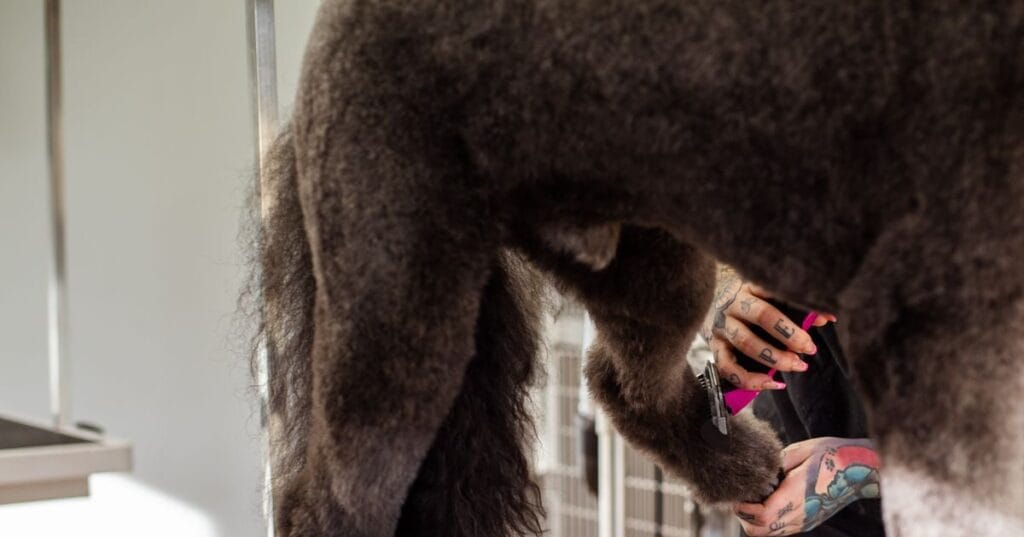
If you’ve ever wondered whether your dog is due for a bath, or noticed their nails clicking across the kitchen floor and thought, “Wait, how long has it been?”, you’re in good company. Grooming advice online ranges from “brush every day” to “barely at all,” and both can be right, depending on the dog.
Table of Contents
The short answer: most dogs need brushing anywhere from once a week to daily, a bath roughly every one to three months, a nail trim every few weeks, regular ear and teeth checks, and a professional groom every four to eight weeks if they have a long, curly, or high-maintenance coat. Short-coated dogs often need far less. Your dog’s coat type, lifestyle, age, and skin health set the real schedule.
This guide covers how often to groom your dog for each task, how the schedule changes by coat type, and which warning signs mean it’s time to call the vet instead of the groomer.
Dog Grooming Frequency at a Glance
Grooming is more than a haircut. It’s a handful of separate routines, each with its own timeline. Treat these as starting points and adjust to your dog:
- Brushing: Once a week for short, smooth coats; several times a week to daily for long, curly, or double coats.
- Bathing: Every one to three months for most healthy dogs, sooner if your dog is visibly dirty or smelly, and only as often as your vet advises if there’s a skin condition.
- Nail trims: Roughly every two to four weeks, or whenever you hear nails clicking on hard floors.
- Ear checks: A quick look every week. Clean only when needed, or on the schedule your vet recommends if your dog is prone to ear problems.
- Teeth brushing: The ASPCA recommends two to three times a week; more often is generally better.
- Professional grooming: Often every four to eight weeks for long, silky, curly, or doodle-type coats, and less often for short coats. These are typical groomer guidelines, not hard rules.
Here’s how that plays out for different dogs.
How Often to Groom Your Dog by Coat Type
Coat type is the biggest factor in your dog’s grooming schedule. The ASPCA’s dog grooming guide organizes its brushing advice by coat for exactly that reason. Think of the ranges below as a starting point, then fine-tune with your groomer or vet.
Short, smooth coats (Boxers, Chihuahuas, Basset Hounds)
These are the low-maintenance dogs. The ASPCA says a smooth, short coat needs brushing about once a week, using a rubber brush to loosen dead skin and dirt, followed by a bristle brush for loose hair. Baths can usually stretch to every one to three months unless your dog rolls in something unpleasant. Between baths, a rubdown with a damp washcloth handles most park dirt.
Professional grooming is often optional for these dogs, though some owners book a groomer for a bath and nail trim.
Short, dense, and double coats (Labradors, Golden Retrievers, Huskies)
These dogs look easy but shed a lot. The ASPCA notes that a short, dense coat like a retriever’s is fine with weekly brushing, and Dogs Scope’s Labrador Retriever breed guide lists weekly brushing for Labs as well. Many dogs with thick coats also “blow” their undercoat in spring and fall. During those heavier shedding weeks, which can last a few weeks, many owners find brushing several times a week keeps loose hair under control. If you’re drowning in fur, our guide on how to keep a dog from shedding covers brushing, diet, and skin factors.
Go easy on baths. An American Kennel Club article on bathing frequency quotes a groomer who warns that over-bathing thick or double coats can strip too much oil from the skin. Also, many groomers and veterinarians advise against shaving a double coat unless there’s a medical reason, so ask before requesting a close clip.
Long, silky coats (Yorkshire Terriers, Havanese, Shih Tzus, Maltese)
Long coats tangle quickly. The ASPCA says a Yorkie-type coat needs daily attention: slicker brush first to remove tangles, then a bristle brush. Dogs Scope’s Havanese breed profile follows the same rhythm, with daily brushing, a bath every one to two months, and monthly nail trims.
The AKC article above cites a groomer who says dogs with longer coats may need baths anywhere from weekly to every four to six weeks, as long as the coat is well maintained between baths. Many owners of these breeds also see a groomer every four to eight weeks, depending on how long they keep the coat. Ask your groomer to keep hair trimmed away from the eyes, since long hair there can irritate them.
Curly and doodle coats (Poodles, Bichons, Doodles)
Curly coats tend to hold loose hair close to the skin, so tangles can build up faster than many owners expect. Plan on brushing several times a week, and daily if you keep the coat long, using a comb to check down to the skin rather than just skimming the surface. Professional trims every four to eight weeks are a common schedule. Poodles also have floppy ears, which the ASPCA lists among the types more vulnerable to ear problems, so ear checks matter here.
Wiry coats and breeds with more than one coat type (Dachshunds)
The Dachshund shows how much coat type matters, even within a single breed. According to Dogs Scope’s Dachshund breed guide, smooth coats need only a quick wipe with a towel or hound glove, longhaired Dachshunds need weekly brushing, and wirehaired ones need weekly brushing plus plucking or stripping a few times a year. All three need monthly nail trims. Same breed, three different routines.
Hairless and wrinkly dogs
Less hair doesn’t always mean less work. The AKC article quotes a groomer saying hairless breeds like the Chinese Crested and Xoloitzcuintli are quite care-intensive and need weekly baths. Dogs with loose facial skin, like Pugs and Shar-Peis, need their folds cleaned with damp cotton and dried thoroughly, according to the ASPCA, to help prevent irritation and infection. If the folds look red, smell sour, or ooze, call your vet.
How Often Should You Bathe a Dog?
Bathing is the one task owners most often overdo. The ASPCA recommends bathing your dog at least once every three months, with more frequent baths for dogs who spend a lot of time outdoors or have skin problems. Many veterinary and grooming sources land on roughly one to three months for healthy dogs, and the AKC makes the same basic point: the right frequency depends on coat type, lifestyle, and health.
Why you can bathe too often
Frequent shampooing can strip the natural oils that protect your dog’s skin, which may leave it dry, itchy, and irritated. If your dog’s skin looks flaky or red after baths, bathe less and talk to your vet.
What to do between baths
- Brush first. Removing loose hair and dirt keeps the coat cleaner for longer.
- Wipe down muddy paws, legs, and bellies with a damp cloth. If your dog regularly comes home caked in mud, our step-by-step guide on how to clean a dog’s dirty belly can help.
- Use a shampoo made for dogs. The ASPCA notes that some human shampoos contain fragrances and other ingredients that can irritate pet skin.
Special cases
If your dog has a skin condition, your vet may prescribe a medicated shampoo and a specific schedule. Follow that plan rather than the general ranges above. And if your dog uses a topical flea or tick treatment, check the product label or ask your vet how long to wait before a bath.
Signs your dog needs a bath
- A noticeable odor, or a smell that rubs off on bedding
- A greasy or dull coat
- Visible dirt, mud, or something they rolled in
- Frequent scratching caused by grime, with no sign of redness or sores (if there are sores or redness, see your vet)
Brushing, Nails, Ears, and Teeth: The Routine in Between
These smaller tasks do more for your dog’s comfort than a fancy haircut does.
Brushing
Brushing removes dirt and dead hair, spreads natural oils through the coat, and helps prevent tangles. It also gives you a regular chance to look for fleas, flea dirt, scabs, or anything unusual on the skin. Match frequency to coat: weekly for smooth short coats, several times a week for medium or double coats, and daily for long or tangle-prone ones. Use a brush suited to the coat, and stop if the skin looks pink or irritated.
Nails
A good rule of thumb from the ASPCA: trim when nails just about touch the ground as your dog walks. If you can hear clicking on hard floors, or nails snag on carpet, it’s time. Indoor, low-activity dogs may need frequent trims, while dogs who walk on rough pavement often wear their nails down and can go longer.
If you’re new to trimming, our guide on how to use dog nail clippers walks through the process step by step. If your dog panics at the sight of clippers, how to keep dog nails short without clipping covers alternatives like grinding tools and natural wear. The ASPCA also advises that if a dog shows serious fear or aggression during nail trims, don’t force it. Ask your vet or a professional groomer for help.
Ears
Check your dog’s ears weekly for redness, odor, discharge, or head shaking. Cleaning is a different story. According to Cornell University’s Riney Canine Health Center, a dog with healthy ears only needs a routine cleaning if dirt or debris shows up, because over-cleaning can irritate the ears. Dogs with allergies, recurrent infections, or floppy ears may need more frequent maintenance, and a cleaning after swimming or bathing is often recommended. Your vet can tell you what’s right for your dog. Never push anything deep into the ear canal, and see your vet promptly if you notice a bad smell, discharge, swelling, or signs of pain.
Teeth
The ASPCA recommends brushing two to three times a week to help prevent tartar and gum disease, using a dog toothbrush and dog toothpaste. Human toothpaste isn’t safe for dogs, and our guide on how to brush dog teeth explains the technique and when persistent bad breath or inflamed gums call for a vet visit.
Professional Grooming: How Often Do You Really Need It?
There’s no single schedule, but groomers commonly suggest these ranges:
- Long, silky, curly, and doodle-type coats: about every four to eight weeks
- Double coats: about every six to twelve weeks, often for baths, nails, and deshedding
- Short, smooth coats: as needed, often every eight to twelve weeks or less
The more you brush at home, the longer you can usually go between appointments. A groomer can also handle jobs that are tough to do at home, such as clipping, hand-stripping, and safely working out stubborn mats. The ASPCA suggests a daily routine to prevent mats in long-haired dogs. If a mat is dense or close to the skin, skip the scissors and go to a groomer or vet, because it’s easy to nick the skin.
When you choose a groomer, ask how they handle anxious dogs, what vaccines they require, and whether they’ll show you the cut they plan before starting. If you budget for regular visits, the dog groomer tip calculator is a handy way to plan, and it notes that a 15% to 20% tip is common in the United States.
What Changes Your Dog’s Grooming Schedule
- Lifestyle: Dogs who swim, hike, dig, or roll in mud need baths and brushing more often than couch-loving companions. The ASPCA notes that indoor dogs tend to shed fairly evenly all year, while outdoor dogs often have a pronounced seasonal shed.
- Season: Shedding picks up in spring and fall. In winter, the ASPCA recommends rinsing salt and chemical ice melters off paws after walks.
- Age: Puppies and senior dogs have different needs (see below).
- Skin and health: Allergies, skin infections, and some medical conditions can change how often your dog should be bathed or brushed. Your vet’s advice comes first.
- Your household: Some groomers suggest more frequent baths to manage dander for allergy-prone owners. Check with your doctor or vet before changing the routine.
Puppies
Puppies don’t need frequent grooming, but they do need practice. The ASPCA recommends getting dogs used to having their feet touched early, ideally as puppies, with gentle daily foot handling and plenty of treats. Add brief sessions of brushing, ear touching, and gentle mouth handling, and keep every session short and positive. Ask your vet when it’s safe to start visiting a groomer, since most require up-to-date vaccines.
Senior dogs
Older dogs may tolerate long grooming sessions less well, especially if they have stiff joints. Shorter, more frequent sessions on a non-slip surface can help. Grooming is also a good time to check for new lumps, skin changes, or sore spots, which are worth mentioning to your vet.
Sample Grooming Schedules
These examples are starting points, not prescriptions.
Labrador Retriever (short, dense coat)
- Brush weekly, more during seasonal shedding
- Bathe every two to three months, or when muddy
- Trim nails every few weeks
- Check floppy ears weekly
- Brush teeth a few times a week
- Professional groom: optional
Havanese (long, silky coat)
- Brush daily
- Bathe every one to two months
- Trim nails monthly
- Wipe eye area and check ears weekly
- Professional groom: every four to eight weeks
Smooth-coated Dachshund
- Wipe down or use a hound glove regularly
- Bathe only when needed, often every few months
- Trim nails monthly
- Check ears and teeth often
- Professional groom: usually optional
Golden Retriever (double coat)
- Brush several times a week, more during spring and fall shedding
- Bathe every one to three months
- Trim nails every few weeks
- Professional groom: every six to twelve weeks if you want help with shedding
Signs Grooming Isn’t the Whole Story
Sometimes a coat or skin problem needs a vet, not a better brush. The ASPCA advises seeing your veterinarian if you notice:
- Skin redness, bumps, rashes, scabs, or open sores
- Bald spots or thinning coat, or excessive shedding outside normal seasons
- Dull, dry hair that pulls out easily
- Constant scratching, face rubbing, or foot licking
- A strong, persistent odor that grooming doesn’t fix
- Ear discharge, head shaking, or swelling
- Persistent bad breath, especially with appetite loss, vomiting, or increased drinking
Frequently Asked Questions
How often should you groom your dog at home?
Brush weekly to daily depending on coat, check nails and ears every week or two, and brush teeth several times a week. Baths usually fit in every one to three months for healthy dogs.
Can you groom a dog too much?
Yes. Over-bathing can dry out skin, and over-cleaning ears can irritate them. Brushing is generally safe when done gently with the right tool, but stop if skin looks red or sore.
Do short-haired dogs need professional grooming?
Not always. Many do well with home brushing, occasional baths, and nail trims. A groomer can still help with nails, baths, and shedding.
How often should you groom a puppy?
Puppies need little actual grooming but benefit from early, gentle practice with brushing, paw handling, and ear and mouth checks. Keep sessions short and rewarding, and ask your vet about the right time to visit a groomer.
How do I know if my dog needs grooming?
Look for odor, a greasy or matted coat, nails that click on the floor, hair in the eyes, dirty ears, or tartar on the teeth. Any of these means you’re due for some grooming.
Should I tip my dog groomer?
Tipping is customary in the United States, and 15% to 20% is a common range. You can use the dog groomer tip calculator to work out the amount.
Conclusion
So, how often should you groom your dog? There’s no universal number, but there is a pattern. Short, smooth coats need a weekly brush and the occasional bath. Double coats need steady brushing, especially in shedding season, and gentle bathing. Long, silky, and curly coats need near-daily attention and regular professional help. Every dog, whatever the coat, needs regular nail, ear, and teeth care.
Start with the ranges here, watch how your dog’s coat and skin respond, and adjust. If something looks off, such as persistent odor, bald patches, red skin, or sore ears, check in with your vet. A consistent, low-stress routine does more for your dog’s comfort than any single grooming appointment.